DEWEHA

DEWEHA

from germany
Technology and equipment

Through innovative frequency conversion induction of circulating cooling water
Physical processing solution.

PART 01

technology origin

Origin of DEWEHA technology

DEWEHA's unique frequency conversion electromagnetic induction technology is based on the electromagnetic theory of Dr. Lorentz, a Dutch scientist who won the Nobel Prize in Physics, and is the result of many years of research and experimentation by Dr. Jürgen Wittmann of Germany.
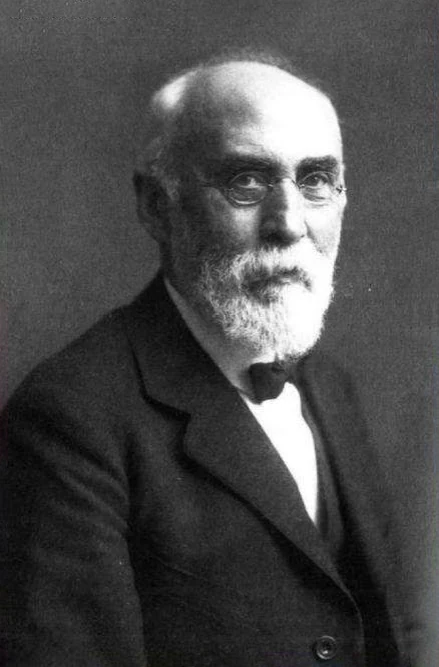
Portraits of researchers related to the origin of technology

frequency conversion inductor

The core of the technology is frequency control using a microcomputer chip, which is applied to circulating water through a coil installed outside the piping. The equipment configuration and installation method will be considered according to the target piping and water system.
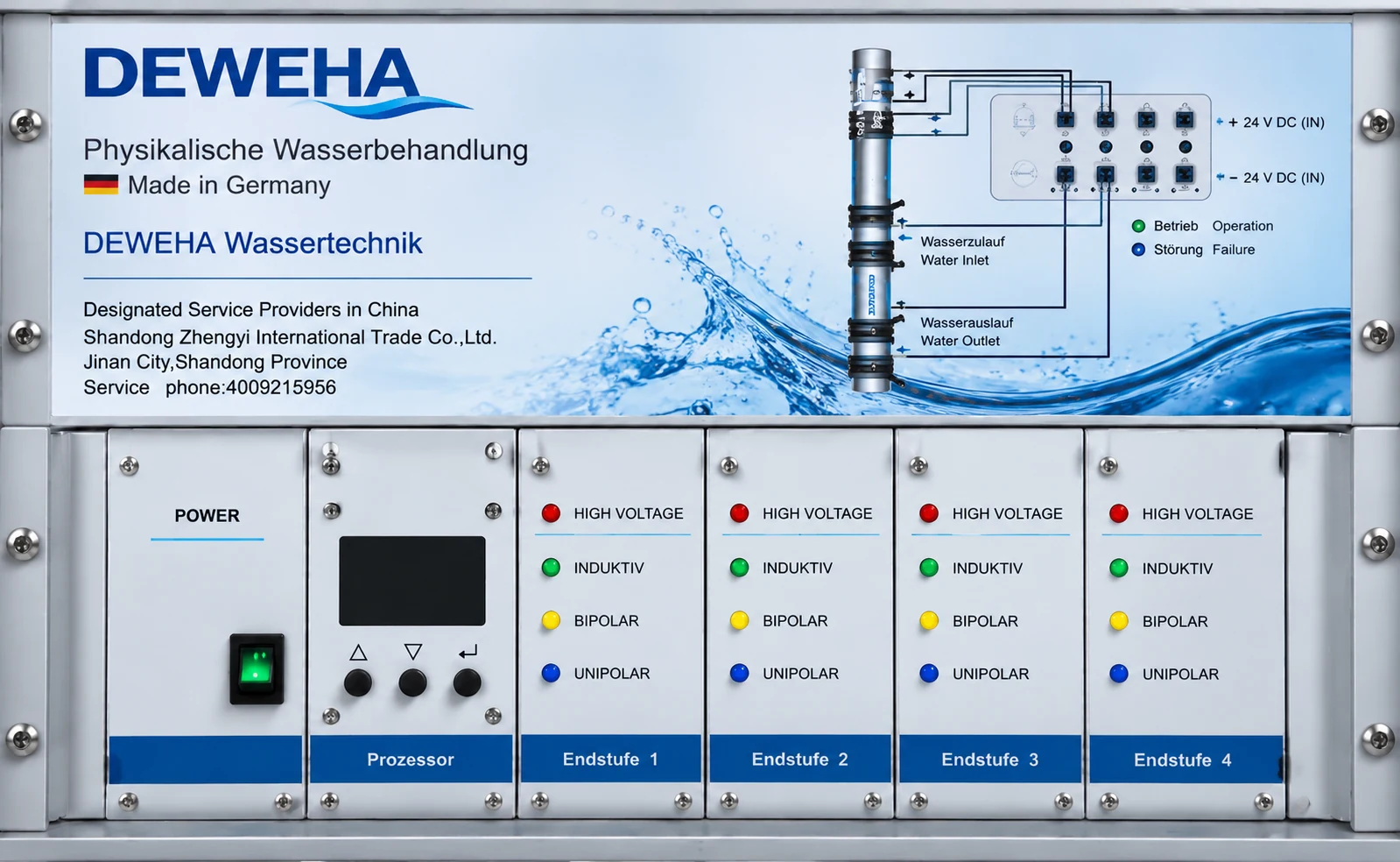
Operation panel of DEWEHA frequency conversion inductor

DEWEHA site installation diagram

This image shows a configuration in which a coil is attached to the cooling water circulation piping and connected to a control device. The installation location and number of coils should be considered according to the pipe diameter and target system.
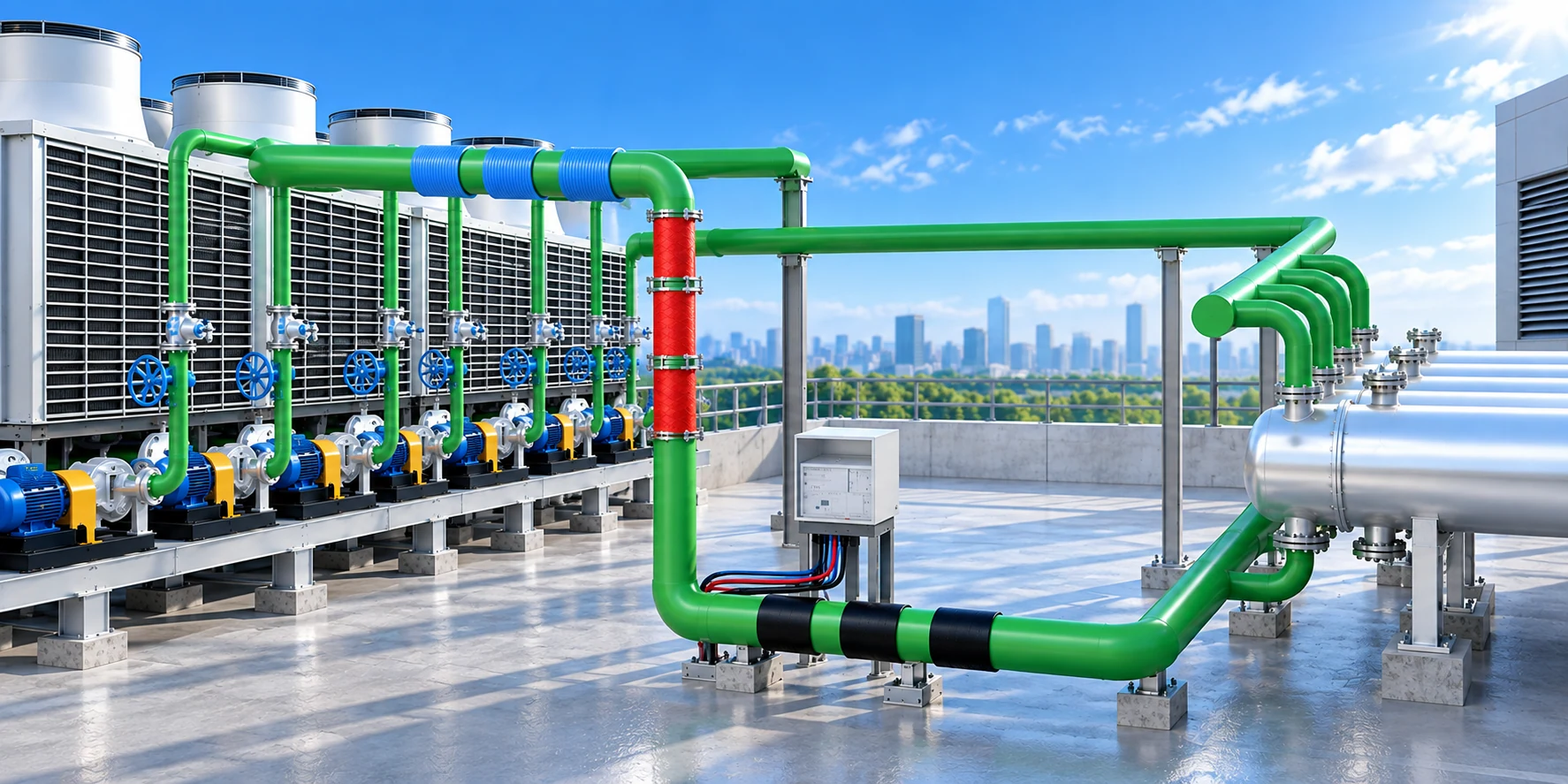
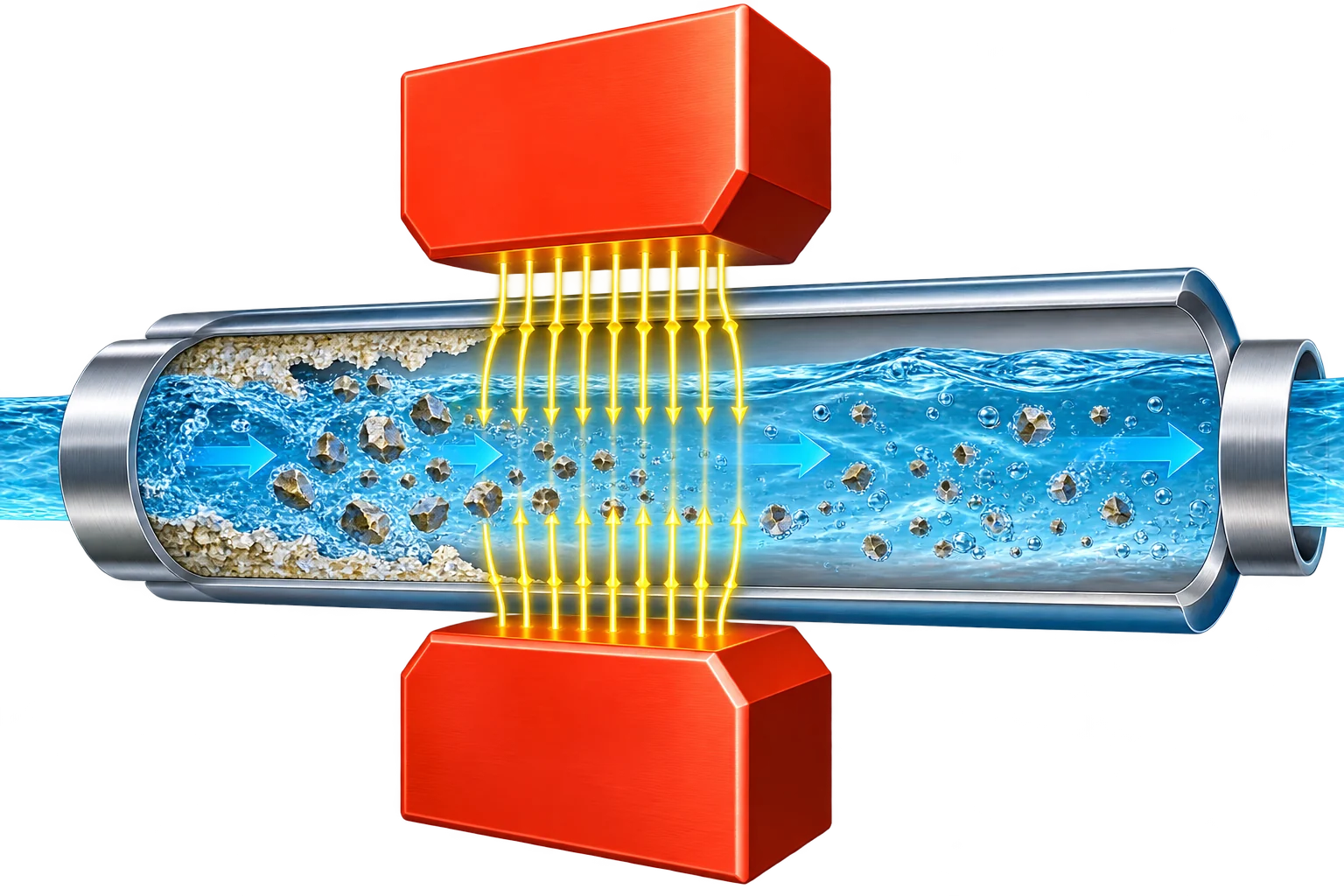
Image of DEWEHA installation configuration in cooling tower and circulation piping

PART 02

Mechanism of action

Mechanism of scale prevention

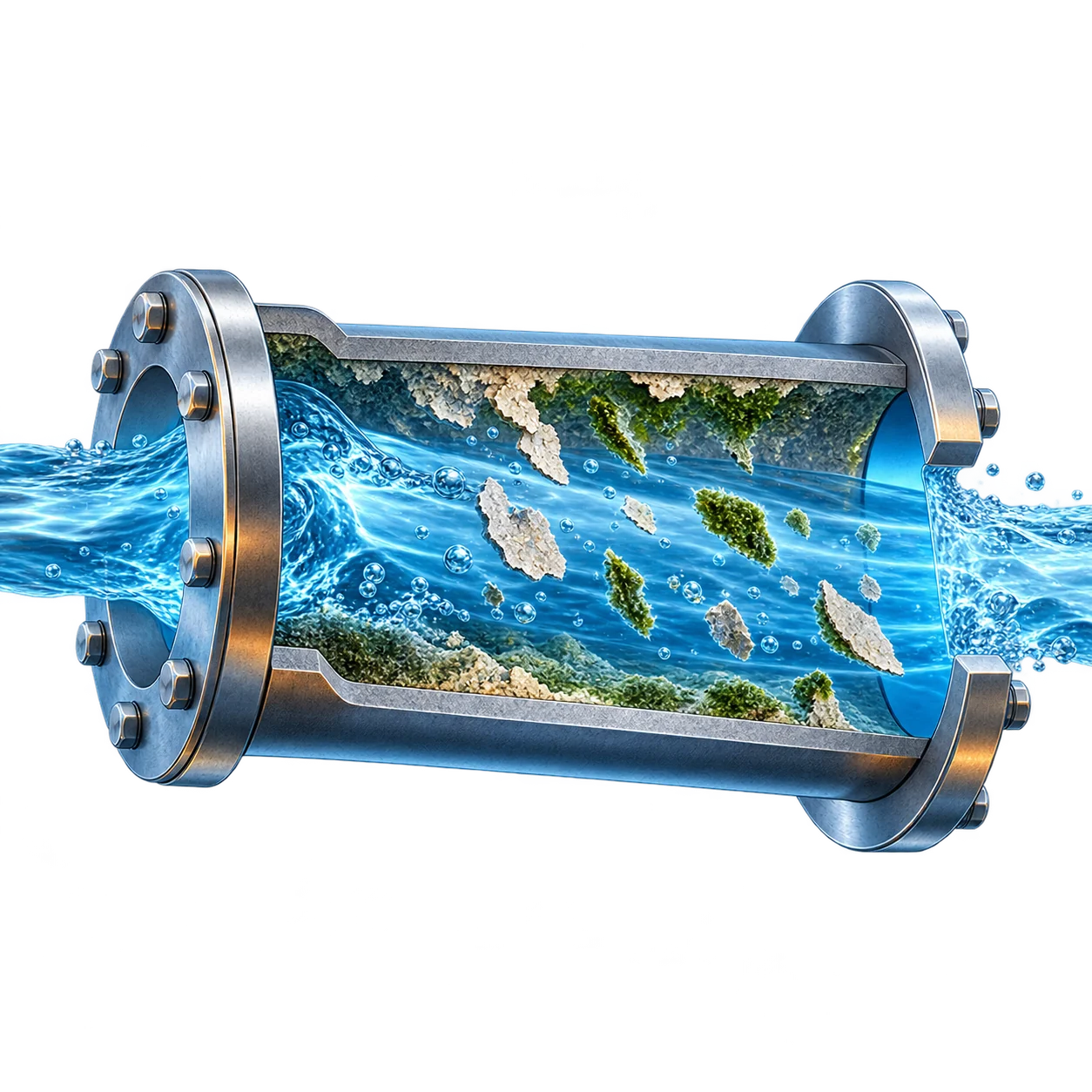
As circulating water passes through an electromagnetic field, it is subjected to Lorentz forces, causing calcium and magnesium ions to collide with carbonate ions to form aragonite calcium carbonate. Its surface has no electric charge, does not stick to the inner walls of the pipes, and stably floats magnetically in water, moving with the water flow and preventing buildup on the heat exchanger surface, providing a stain-proofing effect. It is discharged after reaching a certain concentration factor.

Scale removal mechanism

An image showing circulating water passing through a magnetic field and scale that has come off from the inner wall of a pipe being carried away by the water flow.

Under the action of electromagnetic field, water molecules undergo polarization and magnetization, and chain-like or bulky polymer clusters are cut into small molecular clusters, which improves water activation and scale solubility. Tiny water molecules can penetrate, surround, loosen, dissolve, and remove old scale.

At the same time as descaling, the electrostatic attraction between the old scale and the heat exchanger wall is destroyed by the action of the electromagnetic field, and the original scale on the inner wall of the pipe gradually softens and eventually peels off to achieve the descaling effect.

Sterilization/algae removal

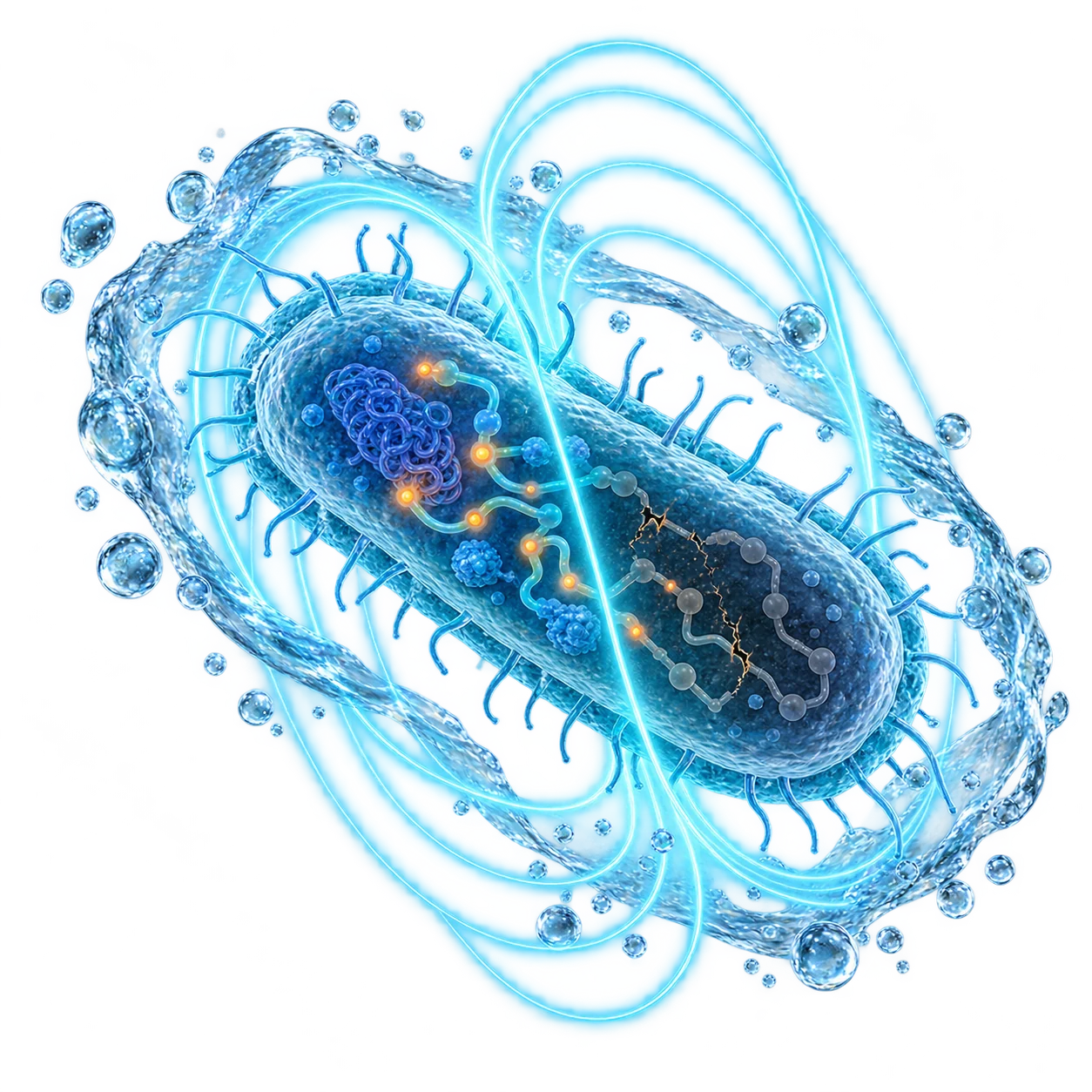
Conceptual diagram of cells surrounded by a magnetic field

The interaction forces of induced currents and magnetic fields can disrupt the normal physiological and metabolic functions of cells.

Conceptual diagram of how electromagnetic fields act on cell membranes

Penetrates cell membranes and affects bacterial viability.

Conceptual diagram of how electromagnetic fields act on water molecules and algae

The magnetic field breaks the hydroxyl bonds of water molecules and generates a certain amount of active oxygen radicals, which affects the metabolism of bacteria and algae and exerts a bactericidal and algae suppressing effect. The bactericidal effect of active oxygen is 600 to 3000 times higher than that of oxygen alone, and there is no residual toxicity.

Conceptual diagram of how deposits in pipes are carried by water flow

When limescale is removed, fungi, algae, and sticky sludge lose their hotbed of adhesion, and are no longer able to adhere to pipe walls along with the water flow.

Rust removal/anticorrosion mechanism

Positive and negative ions in water move in opposite directions under the action of an electromagnetic field, with positive ions moving to the cathode in the magnetic field and negative ions moving to the anode, creating a potential difference and generating a minute electron flow. Red rust that forms on the inner walls of pipes reacts with electrons in the following ways:

3Fe₂O₃·nH₂O+2e → 2Fe₃O₄+(1/2)O₂+3nH₂O

The generated magnetic oxide film (Fe₃O₄) isolates the inner wall of the pipe from water and prevents corrosion from progressing.

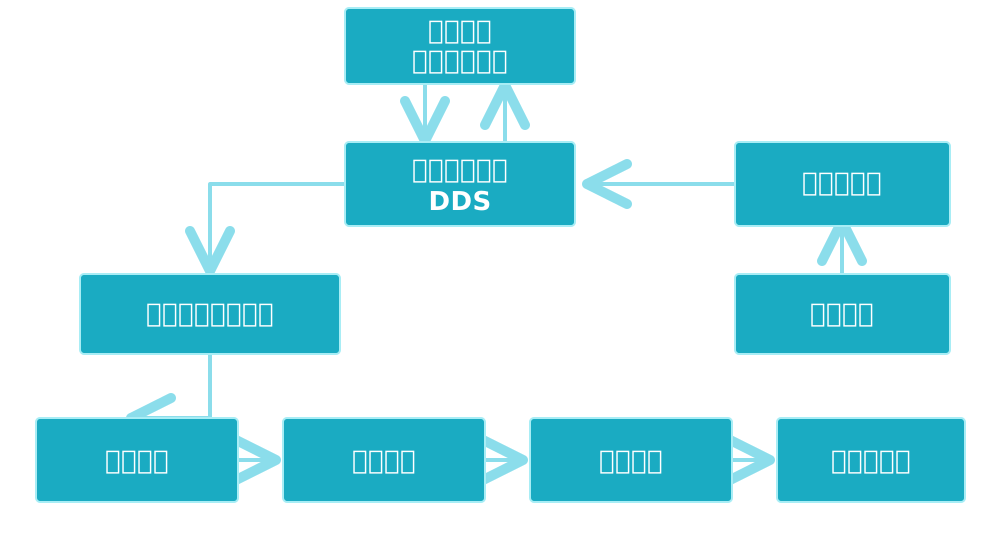
DEWEHA electromagnetic field generator principle diagram

Principle diagram from microcontroller to frequency control, amplification, and electromagnetic pulse output

Essence of technology:It uses electric and magnetic fields to transfer energy and change the bonding state between scale-forming ions and water molecules, causing water to undergo various physical, chemical, electrochemical, and biological reactions.

Core of the technology:Frequency control by microcomputer chip.

PART 03

5 features

  1. All processing

    The materials list the length of time that water remains active after treatment and the distance it travels, and characterize the effect on the entire water system.

  2. strong magnetic field

    If the pipe diameter is large, adjust the required power and number of coils to accommodate the amount of water to be processed.

  3. jamming resistance

    Designed to block unnecessary frequencies and suppress the effects of interference and noise.

  4. broadband

    The frequency is changed in the range of 0 to 60kHz to accommodate various water conditions.

  5. Stable performance

    It is introduced as an easy-to-maintain facility that operates with electricity.

PART 04

Advantages and benefits

Chemicals/cleaning

The aim is to reduce the use of chemicals and the frequency of pipe cleaning.

Heat exchange/water flow

It suppresses scale adhesion and contributes to maintaining heat exchange efficiency and water permeability.

Drainage/makeup water

We aim to increase the concentration ratio of circulating water and reduce the amount of wastewater and make-up water.

equipment protection

This reduces the load on equipment and parts, leading to a review of maintenance work.

Installation/operation

Assuming installation in existing piping, simple operation and maintenance is possible by energizing.

operating costs

Costs such as chemicals, cleaning, and energy can be considered comprehensively.

PART 05

Supported industries and systems

Industries

Oil refineries/oil fields, chemicals/smelting, coal coking/new energy, machinery/automobile manufacturing, shipbuilding, power plants, data centers, food/pharmaceutical factories, rubber/paper factories, airports, district heat supply, office buildings, hospitals, etc.

Industrial application system

Circulating cooling water systems for refrigerators, air compressors, heat exchangers/condensers, oil field heating furnaces, metallurgical/steel/forging equipment, generators, etc.

Other targets

Cooling systems for electric furnaces, mineral heat furnaces, and heating furnaces, air conditioning, heating, and boiler related systems, and water systems that have problems such as scale, algae, and corrosion.

Contact

For inquiries regarding installation of equipment or water treatment, please send us your inquiry using the inquiry form.

000-123-456Business hours 9:00-17:30
Contact